I am coming up for air after some writing, some traveling and various projects. My decline in output is making the CR sponsors a little restless. So to calm them down, I decided to embark on some long-winded prose without hyper-links and explain how I am thinking of the relationship of human rights to the state.
I've been thinking about somehing along the lines of David Kennedy: what is not working in the "field" of human rights, whether "field" means practical limits to professionalism generally, or more abstractly, a zone of politics, critique, imagination, and emancipation. I like the concept of emancipation, no matter that the word seems haughty or fundamentally historic as in its American abolitionist movement sense. People like David Kennedy describe human rights as trying to occupy the political field and obscuring alternative approaches to emancipation, and I think this is a good thing to be concerned about.
Human rights discourse takes a hard look at particular state actions, but not state sovereignty and the continuing power of states to commit such abuses. On the contrary, human rights discourse depends on state institutions so that they will enter into the conventions, protocols and other contracts that set up justicability for human rights claims. This is a problem for several reasons, for example, most of the world's nation-states have their origins in a monopolization of legal uses of violence (and often speech, assembly and other personal freedoms) in the hands of an elite who barred what we now may consider human rights concepts, such as the right to life, self-determination, non-discrimination, and as described in the African Charter, the rights of peoples. While I accept that human rights law's origin in the state means that it has its origin in hegemony, I think human rights law presents some important opportunities for emancipation. New ideas about jurisprudence, admissibility, and of course, new legal norms themselves may be moving in the direction of wider support and capacity to reconfigure and localize formal aspects of the human rights movement. This is a good thing, in my view.
Yet in any close look at human rights, some chewy epistemological questions emerge. Who or what, other than the state, or the contracts agreed to by states in common, can stabilize rights, grant them, and maintain access to them? If we try to keep rights, but refuse their origins in the state, we assume that human dignity or some other human quality is the basis for an ethic of human treatment that has its origins prior to the state, leading us to particular ideas about religion or a supposedly self-evident humanist inkling akin to the Golden Rule. If indeed an origin for rights exists outside of the state, why do we find throughout world history so many variations in societal norms and roles? Do human rights step in when the state fails, or do states use the simple fact of their accession to human rights instruments to legitimize their abuses? States typically wager that enforcement of international law is weak and that challenges to state power from human rights instruments will only come in the form of negative limits, which can be gotten around with a little creativity or obfuscation. Resulting proposals to replace state citizenship with some new global citizenship replace the original questions about states and rights with new questions that may even be more problematic concerning soft regional power. What would global or regional citizenship even mean? I really cannot tell.
The idea in all of this for me is that somehow emancipation through legal means needs to be complemented by emancipation through political means, and likely proceeded by it. Maybe a critique of the state can be synonymous with legal reforms, and a legitimate juncture between the two will be easier to imagine in the future. For now, the sense of human rights as a new, contingent vision of power, challenging both the state and the political sphere even while it draws strength and attention from them, is interesting to me. I will still admit the following, and encourage others to do the same: that the attempts of human rights at emancipation seem outmatched and internally confused for the foreseeable future. But this does not need to dissuade us from working harder to reconcile different emancipatory strategies.
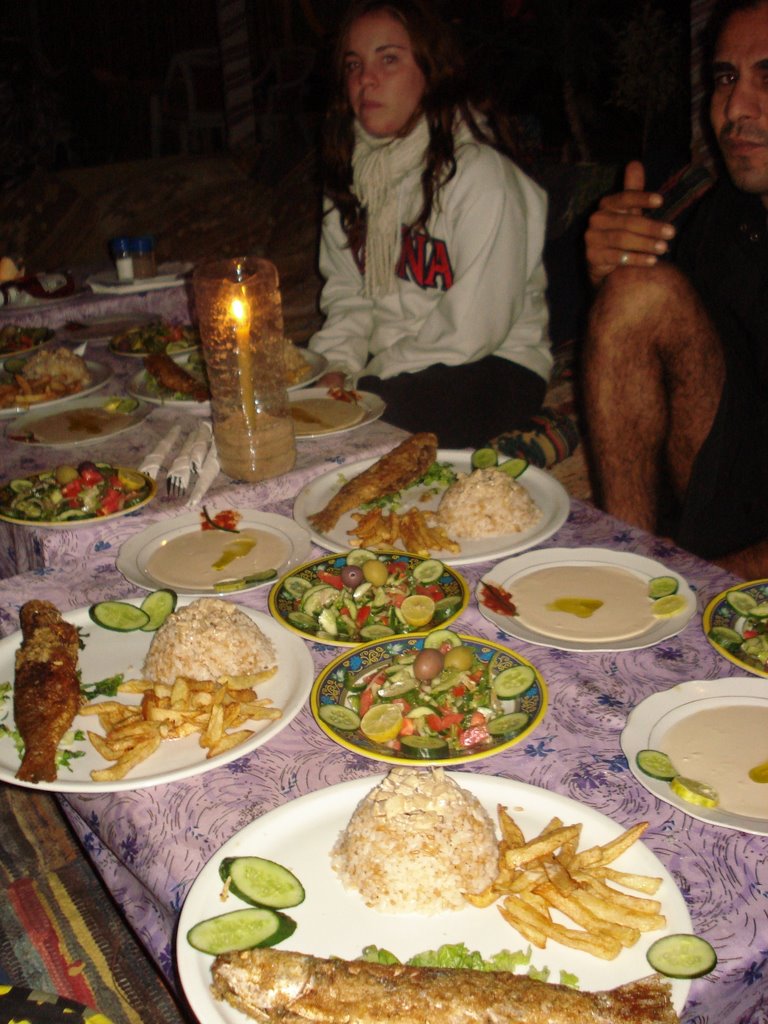


 The iftar served on the sidewalk outside of this restaurant was in such hot demand that everyone stood shoulder to shoulder using forks to eat out of big dishes. Semolina pastas, koushary, nutty pastries, and casseroles of beef, lamb and chicken were de rigeur. To drink: tamarind juice, kharkady and various root-derived beverages. Mumtaz!
 Adjacent to the restaurant was this assemblage of birdcages, containing canaries, parakeets, pigeons and doves. The proprietor is a local legend and also an antiques collector. I did not feel comfortable taking his picture but I had no problem taking pictures of his birds.
 Ramadan streamers can be so lovely as to be worthy of their own holiday.

