9.21.2007

9.01.2007
Imagining a "Planet of Slums"
The London Review of Books sez: "If there are countries in the South where more people live in slums than live in cities proper, and if by 2020 half of the world’s urban population will exist in poverty, then the slum deserves more attention than it’s getting from planners, sociologists, environmentalists, epidemiologists and demographers."
And so the last few months I've spent a lot of time thinking about Mike Davis' book Planet of Slums. Its got a little bit of something for about everyone, especially apocalyptic types. Though I don't often find myself among their numbers, the book really poked at my imagination. I have some quibbles with it, but the overall thrust is a fresh and urgent view on the future of the developing world's cities and their inhabitants. Since Cairo is one of the many cities Davis cites, its helped me to reposition my own interests in human rights and to consider tentative ideas about a thesis.
An interview with Mike Davis from ZMagazine. And UN-HABITAT is on a parallel track with some of Mike Davis' concerns.
And so the last few months I've spent a lot of time thinking about Mike Davis' book Planet of Slums. Its got a little bit of something for about everyone, especially apocalyptic types. Though I don't often find myself among their numbers, the book really poked at my imagination. I have some quibbles with it, but the overall thrust is a fresh and urgent view on the future of the developing world's cities and their inhabitants. Since Cairo is one of the many cities Davis cites, its helped me to reposition my own interests in human rights and to consider tentative ideas about a thesis.
An interview with Mike Davis from ZMagazine. And UN-HABITAT is on a parallel track with some of Mike Davis' concerns.
7.16.2007
Spring Break in Ethiopia
It was that rarest of spring vacations: no MTV cameras and no BBQs on the beach, as Ethiopia is landlocked. My friends Aidan and Dalia and I took ten days in Ethiopia; we flew from Cairo into Addis Ababa, the capital city of Ethiopia, and from there bussed to Bahir Dar, a regional capital next to Lake Tana, where the Blue Nile begins. We took a day trip to Awra Amba, an atheist weaving cooperative in rural north-central Ethiopia. Then we came back to Addis and flew back to Cairo. Politesse and poor lighting in music-rich bars meant that I wasn't able to come away with all the photos I wanted on this trip. But what's below is partly from Dalia's collection as well, so thanks, Dalia.
Westerners spending a few days in any part of the country would very quickly lose any expectations of a dry, arid place where drought might be common. We saw a rather green country with lots of lakes and rivers. According to Robert D. Kaplan's book on the Cold War in this region, Surrender or Starve, it took the Western media years to reverse initial incorrect reports that Ethiopians were dying by drought during the 1970s and 1980s. Kaplan writes that famines were actually created by the Derg (or "committee" which ruled the nation after Selassie), to harm targeted sections of the country's population to the point of forcibly displacing farmers at harvest time. In our travels, we saw some evidence of the civil war in the form of the occasional defunct tank, long abandoned, and never cleared from its position near a country road. Today, the Meles Zenawi government may again be trying to trigger a famine in the Ogaden region, according to CNN and other sources. The government continues to enjoy significant support from the United States, despite numerous human rights problems and various tensions in different regions of the country. A short article on recent fighting in Ogaden was printed in the Guardian.
Addis Ababa is the home of the African Union and was home to its predecessor, the Organization of African Unity, beginning in 1963. Today the city is possibly as large as 1.5 Million people, and as ever, is stable, hilly, rather pretty, and full of interesting restaurants, bars, markets and other sites. Addis is large but manageable for the layperson because it is walkable throughout and relatively quiet in the downtown areas. Travel books we read warned us of pickpockets and con men, but we fortunately encountered none of this, just very kind people (and the occasional "tourguide"). Many tourists come as Ethiopia is known as a birdwatching paradise with good national parks, and its wonderful food is very popular, as exemplified by this adjective-laden tourism article from the New York Times.
Despite the discouraging political situation in Ethiopia, we had a wonderful trip, learned a lot, ate very well, and met interesting people. The trip made a big impression on me and I hope to return some day.

Perhaps 80% of Ethiopians live in rural areas and small towns, which is strikingly rural in comparison to most African countries. Here's a glimpse of a small village we drove through not far from the Blue Nile Gorge.

I took this picture of the moon going down when the sun came up from our window at Addis Ababa's wonderful Itegue Taitu Hotel.

Dalia and I dressed to blend in with the law department building of Addis Ababa University (note the Lion of Judah).


A juice bar window made the difference between chiarascuro and just a mediocre picture of Aidan. The juice bar was on this rather typical street in Bahir Dar.


These pictures are from Awra Amba, an atheist farming and weaving cooperative in central Ethiopia between Bahir Dar and Woldiya. Note the bicycle wheel wool spinners.


While staying in Bahir Dar, we took a day to cross Lake Tana by boat and visit this church. The priest pictured here showed us illustrated scriptures on goat skin, written in Ge'ez, a language now only used by the Ethiopian Orthodox Church.

The Blue Nile, 300 kilometers into its 2,750 kilometers to Cairo.
Westerners spending a few days in any part of the country would very quickly lose any expectations of a dry, arid place where drought might be common. We saw a rather green country with lots of lakes and rivers. According to Robert D. Kaplan's book on the Cold War in this region, Surrender or Starve, it took the Western media years to reverse initial incorrect reports that Ethiopians were dying by drought during the 1970s and 1980s. Kaplan writes that famines were actually created by the Derg (or "committee" which ruled the nation after Selassie), to harm targeted sections of the country's population to the point of forcibly displacing farmers at harvest time. In our travels, we saw some evidence of the civil war in the form of the occasional defunct tank, long abandoned, and never cleared from its position near a country road. Today, the Meles Zenawi government may again be trying to trigger a famine in the Ogaden region, according to CNN and other sources. The government continues to enjoy significant support from the United States, despite numerous human rights problems and various tensions in different regions of the country. A short article on recent fighting in Ogaden was printed in the Guardian.
Addis Ababa is the home of the African Union and was home to its predecessor, the Organization of African Unity, beginning in 1963. Today the city is possibly as large as 1.5 Million people, and as ever, is stable, hilly, rather pretty, and full of interesting restaurants, bars, markets and other sites. Addis is large but manageable for the layperson because it is walkable throughout and relatively quiet in the downtown areas. Travel books we read warned us of pickpockets and con men, but we fortunately encountered none of this, just very kind people (and the occasional "tourguide"). Many tourists come as Ethiopia is known as a birdwatching paradise with good national parks, and its wonderful food is very popular, as exemplified by this adjective-laden tourism article from the New York Times.
Despite the discouraging political situation in Ethiopia, we had a wonderful trip, learned a lot, ate very well, and met interesting people. The trip made a big impression on me and I hope to return some day.

Perhaps 80% of Ethiopians live in rural areas and small towns, which is strikingly rural in comparison to most African countries. Here's a glimpse of a small village we drove through not far from the Blue Nile Gorge.

I took this picture of the moon going down when the sun came up from our window at Addis Ababa's wonderful Itegue Taitu Hotel.

Dalia and I dressed to blend in with the law department building of Addis Ababa University (note the Lion of Judah).


A juice bar window made the difference between chiarascuro and just a mediocre picture of Aidan. The juice bar was on this rather typical street in Bahir Dar.


These pictures are from Awra Amba, an atheist farming and weaving cooperative in central Ethiopia between Bahir Dar and Woldiya. Note the bicycle wheel wool spinners.


While staying in Bahir Dar, we took a day to cross Lake Tana by boat and visit this church. The priest pictured here showed us illustrated scriptures on goat skin, written in Ge'ez, a language now only used by the Ethiopian Orthodox Church.

The Blue Nile, 300 kilometers into its 2,750 kilometers to Cairo.
6.14.2007
Food & Drinks in Ethiopia
I finally, finally, finally got a chance to update the blog and so as to remain somewhat chronological, I begin here with some reflections on my trip this spring to Ethiopia. Here are some notes on Ethiopian gastronomie without any real method of organization other than the photo-caption-photo-caption kind.

My friends Dalia and Aidan are sitting here at the friendly Itegue Taitu Hotel in the Piazza district of Addis Ababa. This city of 4.5 million or so is the capital of Ethiopia, and Piazza is kind of its uptown. This little patio is a terrific place to start the day with really good coffee and oatmeal. The hotel features posted prices, BBC on satellite, and a phone for customers that is dialed out by a switchboard operator on the hotel staff.

Delicious machiattos and donuts at the Tomoco Coffeeshop, also in the Piazza region of Addis. A kilo of freshly roasted beans (Ethiopian) would cost you less than $5 here. The place was apparently founded by Italians in the 1930's.

This is a photo of macchiato in a brown mug on a white tablecloth with blue stripes on it.

I don't remember what this coffee drink was called but it featured condensed milk or something like it.

This is spriss, from a small juice bar in Bahir Dar. The top 1/3 is a mix of banana puree and lime juice, and the bottom 2/3 is avacado puree. Totally fresh, brilliant, healthy, awesome. Also comes in squash and orange.

My apologies to this German girl whose name I forgot. I selected this photo because she kind of snaps the Ras Dashen beer into the territory of 70's magazine advertising. This was at the Ghion Hotel in Bahir Dar, on the bank of Lake Tana, the headwaters of the Blue Nile. Ras Dashen beer is a welcome and robust counterpoint to any spicy Ethiopian dish. Cheap by Egyptian standards, it is far better than Egypt's Stella, and features a pleasing label around a classic brown bottle. There is basically no reason to drink imported beer in Ethiopia.

While walking around and checking out some churches in Entoto Hills, north of Addis Ababa, we took a break at a wonderfully restful little dining room that was kind of an extension of a small bar. The owner of the place was kind enough to bring us some tasty wat with huge chunks of homemade western-style bread as well as some beer. This is St. George's, which is simply awesome. Its label matches the matches label. It started raining quite hard after we took this photo but we decided to leave anyway and got soaked on our way back to the bus station. Delicious rainy day food and drink, but no photos of the wat.

This was taken in the aptly titled Addis Ababa Restaurant. There are a variety of little gravy-like dishes here, many of them vegetarian, but some from lamb or beef, laid out on injera. That's like a floppy pancake made out of something called tef flour. I think Ethiopian cuisine is simply awesome, its very healthy and filling, and its great for cheapskates who eat in a group. Some of my friends occasionally hire Ethiopians living in Cairo to cook and I need to look into this.

Tej, or honey wine, brewed by the aforementioned Addis Ababa Restaurant. Usually you get tej in a place called a beat, but this is a rare exception. I can't really describe the taste, a bit . . . waxy?

My friends Dalia and Aidan are sitting here at the friendly Itegue Taitu Hotel in the Piazza district of Addis Ababa. This city of 4.5 million or so is the capital of Ethiopia, and Piazza is kind of its uptown. This little patio is a terrific place to start the day with really good coffee and oatmeal. The hotel features posted prices, BBC on satellite, and a phone for customers that is dialed out by a switchboard operator on the hotel staff.

Delicious machiattos and donuts at the Tomoco Coffeeshop, also in the Piazza region of Addis. A kilo of freshly roasted beans (Ethiopian) would cost you less than $5 here. The place was apparently founded by Italians in the 1930's.

This is a photo of macchiato in a brown mug on a white tablecloth with blue stripes on it.

I don't remember what this coffee drink was called but it featured condensed milk or something like it.

This is spriss, from a small juice bar in Bahir Dar. The top 1/3 is a mix of banana puree and lime juice, and the bottom 2/3 is avacado puree. Totally fresh, brilliant, healthy, awesome. Also comes in squash and orange.

My apologies to this German girl whose name I forgot. I selected this photo because she kind of snaps the Ras Dashen beer into the territory of 70's magazine advertising. This was at the Ghion Hotel in Bahir Dar, on the bank of Lake Tana, the headwaters of the Blue Nile. Ras Dashen beer is a welcome and robust counterpoint to any spicy Ethiopian dish. Cheap by Egyptian standards, it is far better than Egypt's Stella, and features a pleasing label around a classic brown bottle. There is basically no reason to drink imported beer in Ethiopia.

While walking around and checking out some churches in Entoto Hills, north of Addis Ababa, we took a break at a wonderfully restful little dining room that was kind of an extension of a small bar. The owner of the place was kind enough to bring us some tasty wat with huge chunks of homemade western-style bread as well as some beer. This is St. George's, which is simply awesome. Its label matches the matches label. It started raining quite hard after we took this photo but we decided to leave anyway and got soaked on our way back to the bus station. Delicious rainy day food and drink, but no photos of the wat.

This was taken in the aptly titled Addis Ababa Restaurant. There are a variety of little gravy-like dishes here, many of them vegetarian, but some from lamb or beef, laid out on injera. That's like a floppy pancake made out of something called tef flour. I think Ethiopian cuisine is simply awesome, its very healthy and filling, and its great for cheapskates who eat in a group. Some of my friends occasionally hire Ethiopians living in Cairo to cook and I need to look into this.

Tej, or honey wine, brewed by the aforementioned Addis Ababa Restaurant. Usually you get tej in a place called a beat, but this is a rare exception. I can't really describe the taste, a bit . . . waxy?
5.01.2007
Imagistic Homesickness
Over the last few weeks I have begun getting a little inkling of what it will be like to be home this summer for a while. It does not exactly feel like homesickness but it has that form. It consists just of images:
visiting friends at their apartments
green plants in parks with lakes
miracle whip
guacamole
fried tofu
iced tea
thunderstorms
sailing
lemoncello and wine in the back yard
lighter fluid smell from the neighbor's grill
baseball on the radio
college radio
the public library
news hour
street fairs
driving
bicycling and drinking out of my water bottle
internet at home
drinking beer at concerts
free thursday nights at the walker art center
monday movies at loring park
listening to tapes in the car
talking with mom and dad about politics
mowing the lawn
ice cream from grand old creamery
the errand trifecta: groceries, post office, library
visiting friends at their apartments
green plants in parks with lakes
miracle whip
guacamole
fried tofu
iced tea
thunderstorms
sailing
lemoncello and wine in the back yard
lighter fluid smell from the neighbor's grill
baseball on the radio
college radio
the public library
news hour
street fairs
driving
bicycling and drinking out of my water bottle
internet at home
drinking beer at concerts
free thursday nights at the walker art center
monday movies at loring park
listening to tapes in the car
talking with mom and dad about politics
mowing the lawn
ice cream from grand old creamery
the errand trifecta: groceries, post office, library
4.12.2007
Miscellaneous Photos
Here are several photos I have been unsure of where to post so I'll put them all together.

These are the grounds of Ben Ezra Synagogue, rebuilt at the site of an earlier synagogue. This is one of many ancient churches and synagogues in the neighborhood of Coptic Cairo. Around this corner and to the left is where Moses as a baby is said to have been found in the reeds.

The strange and wonderful Sinai town of Nuweiba at dusk.

This grocery store near my apartment in Cairo was one of many that redecorated to sell treats in advance of Moulid (Muhammad's birthday).

My parents visited in January. This is my favorite picture from then. We were in the back of a 4 x 4 driving through a bumpy patch in the Black Desert in central Egypt.

Beautiful people wearing beautiful hats helped me to celebrate my birthday. Here are just a few of them.

These are the grounds of Ben Ezra Synagogue, rebuilt at the site of an earlier synagogue. This is one of many ancient churches and synagogues in the neighborhood of Coptic Cairo. Around this corner and to the left is where Moses as a baby is said to have been found in the reeds.

The strange and wonderful Sinai town of Nuweiba at dusk.

This grocery store near my apartment in Cairo was one of many that redecorated to sell treats in advance of Moulid (Muhammad's birthday).

My parents visited in January. This is my favorite picture from then. We were in the back of a 4 x 4 driving through a bumpy patch in the Black Desert in central Egypt.

Beautiful people wearing beautiful hats helped me to celebrate my birthday. Here are just a few of them.
"I See What You're Doing There"


Brogan and Sherief, pictured above, are the originators of this banal, yet entrancing gambit. And I think it's fair to say I'm its chronicler. We've been hashing out the details here at parties, workshopping it among the AUC expat community, and are now ready to unveil it to the interweb community.
1. Someone does something slyly referential and possibly edgy or self-deprecating, likely taking the form of a joke at a party.
2. To enhance a spirit of playfulness, you address them with the following speech acts:
A. "i see what you're doing there"
(sometimes alt. "i don't see what you're doing there,")
B. "i understand it"
(often alt. "i don't really understand it")
C. ". . . and i like it."
(often alt. ". . . but i don't really like it.")
Glasses are knocked against each other and teeth are revealed. . .
3. The other parlor game participant can respond IN THE SAME WAY in which you referred to them. Specifically, Did THEY see what YOU were doing? Did THEY understand IT and did THEY like what YOU did?
TIP: Deviating from the form stated here robs the tradition of a certain weightiness and comedic timing but you can do two of the three for the sake of variety, or change the wording, so long as you keep each unit of meaning in order.
Now you're ready - Make it your own!
3.17.2007
Mugabe continues attacks on MDC
The ruling ZANU-PF party's Robert Mugabe has been President of Zimbabwe since the first post-independence election in 1980. Here are a few links on the recent detentions and tortures of members of the MDC, Zimbabwe's major opposition party.
Sokwanele/Zvakwana features a good slideshow recap of media reports. There are some rather graphic images of people who have been beaten by police, but this is a really good capsule on the recent spate of beatings. Things like this make the internet valuable - highly recommended.
The BBC offers this roundup of blog opinion from Zimbabwe.
This background article on Zimbabwe's prospects for political change from the Globe and Mail is more realistic than the chirpy and somewhat ill-informed backgrounder from CBS News. If a transition of power was simply based on the public's recognition of growing problems in Zimbabwe, there might have been a change of power in Zimbabwe some 15 or 20 years ago, before hyperinflation, before shortages in food, oil, and concrete, before massive refugee flows, and government-sponsored demolition of housing, and so many cases of rape and torture of citizens.
Here are some better background articles from the Guardian on Zimbabwe's political crisis.
People like Mugabe rule with the correct calculation that - at best - people outside of Zimbabwe are simply not paying attention - and at worst - that people outside of Zimbabwe operate on the assumption that Africans are unable to govern themselves and that whatever happens in one Southern African nation will have a negligible impact elsewhere. I am doing a paper this term on Zimbabwean refugees and I hope to post more on the subject soon.
Sokwanele/Zvakwana features a good slideshow recap of media reports. There are some rather graphic images of people who have been beaten by police, but this is a really good capsule on the recent spate of beatings. Things like this make the internet valuable - highly recommended.
The BBC offers this roundup of blog opinion from Zimbabwe.
This background article on Zimbabwe's prospects for political change from the Globe and Mail is more realistic than the chirpy and somewhat ill-informed backgrounder from CBS News. If a transition of power was simply based on the public's recognition of growing problems in Zimbabwe, there might have been a change of power in Zimbabwe some 15 or 20 years ago, before hyperinflation, before shortages in food, oil, and concrete, before massive refugee flows, and government-sponsored demolition of housing, and so many cases of rape and torture of citizens.
Here are some better background articles from the Guardian on Zimbabwe's political crisis.
People like Mugabe rule with the correct calculation that - at best - people outside of Zimbabwe are simply not paying attention - and at worst - that people outside of Zimbabwe operate on the assumption that Africans are unable to govern themselves and that whatever happens in one Southern African nation will have a negligible impact elsewhere. I am doing a paper this term on Zimbabwean refugees and I hope to post more on the subject soon.
The Law Students Association

Some of LSA's high board in the P. R. glitz of Club Week.
Finally - my first posting in weeks. One reason for this lag has been that I'm a bit busy right now as President of something called the Law Students Association. We host lectures and films and we are a vehicle for student concerns, and hope to link current students with internships and other opportunities. Its been very satisfying so far to hang out with students and faculty and learn more about the future of our department, but it is currently consuming about 20% of my free time with emails and meetings and so forth.
We recently helped the department host a lecture and discussion with Aaron Page, on the plaintiffs' team of the Aguinda v. ChevronTexaco case. An NGO partner of the plantiff's team maintains an interesting website on their case. Among other charges, the plantiffs, indigenous people in Ecuador, claim that toxic waste from Texaco's oil explorations has given them cancer and prevented their access to clean water. (I'll let you guess which side of the case has deeper pockets.)
Finally, here's the webpage for a group some of us are volunteering for currently, the Sudanese Community Development Project. They operate a small school that I visited recently. As many Sudanese people live here in Egypt without the refugee status that would allow them to attend public school, places like this are their best option for learning in a structured environment. Unfortunately I don't have much time to help just now but they have a very good thing going.
Last but not least, there's even a modest LSA webpage on the Law Department website now. We are proud of this little technocratic miracle. More "content" to come there so stay tuned . . .
2.16.2007
Extraordinary Rendition on trial
Here's a brief article on the Italian case questioning the "extraordinary rendition" policy of the Bush administration. It is alleged here that Egypt is one of the countries in which detainees taken in the War on Terror have been secretly tortured, and the court is holding CIA personnel responsible.
2.05.2007
The "Arab Street" - Home of the Hummer?
My friend Bill just told me about this video clip taken by some US soldiers driving a Hummer in Iraq. It offers some insights into the so-called "Arab street" we don't see on prime time news in the States.
"Bold, distinctive and uncompromising," we are told by Hummer, "the H3x forces a double-take, wherever you're headed."
"Bold, distinctive and uncompromising," we are told by Hummer, "the H3x forces a double-take, wherever you're headed."
2.03.2007
Christmas and New Year's in Malta
 Moored boats in Bormla, Malta.
 A Christmas Eve procession in Paola, Malta.
 A long walkway between homes finally came to an end here in Rabat, Malta.
 Elaine at a portside boat house, Marsalforn, Gozo.
 Me standing next to salt pans in Marsalforn, Gozo.
 A quiet street in Valleta, the walled capital of Malta.
Between Christmas and early January, I visited the Mediterranean nation of Malta with my friend Elaine. We travelled through the larger islands of Malta and Gozo, but we bypassed Comino, the small one. From an informal survey I conducted, it seems that most people I know are familiar with Malta, or at least the word Malta, from the film The Maltese Falcon. The film's okay but its landscapes and set pieces can't hold a candle to Malta itself, which is in color. Imagine using telephones, opening and closing doors, and accusing business associates of wrongdoing in color, instead of black and white.
It gets better: Malta has a pretty extraordinary cultural and political history, with some human-made structures dated at 7,000 years old. Numerous civilizations each left their mark with temples or crypts or cathedrals or military bases or industrialization or something of the kind. Arabs conquered the islands in the eighth century and left behind the basis for what is now the language of Malti/Maltese. Over time on top of its semitic root is a lot of Italian influence among some other European languages that have come into play. People speak Malti with an Italian cadence to my ears, and that's not surprising, as Malta is near Sardinia. Lots of Maltese people speak English as well, since the most recent occupiers of Malta were the English, who threw in the colonial towel there in 1964. An interesting aspect of recent Maltese international relations is its "refoulement" of Eritrean asylum seekers back to Eritrea. This has led to human rights criticism from by Amnesty International, among other organizations.
Well, we discovered that visiting Malta in the off season when the resorts and many shops are closed, is a wonderful and relatively cheap way to see Malta. The busses run well and are very affordable with service to most parts of Malta and Gozo. I suggest staying at the eccentric and well-maintained Asti Guesthouse in Valleta, which is about as close as you can get to a hostel. Malta is in the EU but for now they still use the Maltese Lira. There are some nice links on Malta here.
 A bus terminal outside the city walls, Valetta, Malta.
1.15.2007
Haiku for Microbus Drivers
I am going to go out on a limb and presume that the haiku has essentially no currency here in Egypt. Nevertheless, I rationalize the lack of posts over the last month by providing this little poem to the microbus drivers of Cairo. Please note that a midan (pronounced "mee-dahn") is a square, or a large intersection. Not all haikus are 7-5-7, I admit most are 5-7-5. (I was recently told I had an "inverted" haiku.)
Pressing now into the fray
your crumpled cash hand
sorts traffic at the midan
Happy 2007 to all on the Roman calendar!
Pressing now into the fray
your crumpled cash hand
sorts traffic at the midan
Happy 2007 to all on the Roman calendar!
12.10.2006
Pinochet Dies
The former Chilean dictator Augusto Pinochet died on December 10. Here's an interesting obituary from National Public Radio, USA.
Greg Palast writes here on Pinochet and Milton Friedman, who also died recently.
No online reference to Pinochet can be complete without the obituary from the D.C.-based National Security Archive. There are some interesting tidbits here about US responsibility for Chile's "regime change." Rome wasn't burned in a day, you know. It took classified assessments and memos first, and fastidious denials later.
Greg Palast writes here on Pinochet and Milton Friedman, who also died recently.
No online reference to Pinochet can be complete without the obituary from the D.C.-based National Security Archive. There are some interesting tidbits here about US responsibility for Chile's "regime change." Rome wasn't burned in a day, you know. It took classified assessments and memos first, and fastidious denials later.
Fall Break in Cyprus
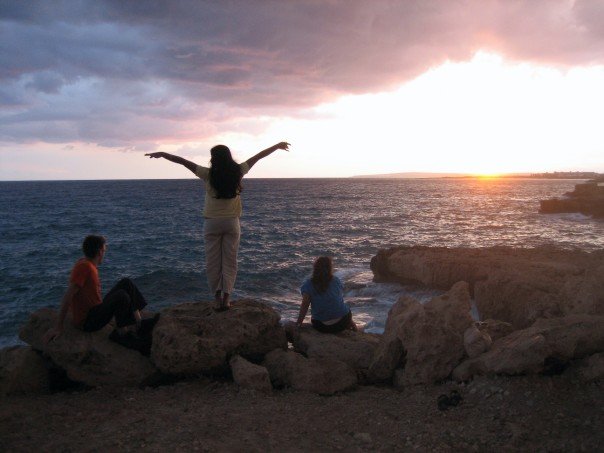
My friend Kavita's yawn became the stuff of postcard photography during this sunset in Agia Napa.

The ancient ruins of Apollo's Temple near Limassol. Cyprus also figures prominently in Greek mythology for being the place that Aphrodite emerged from the Sea.
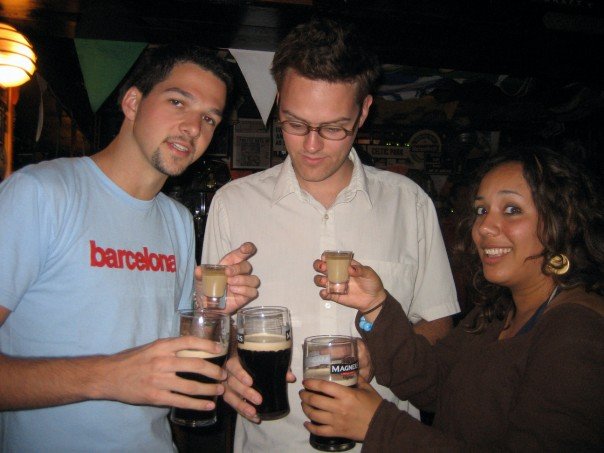
Irish Car Bombing activity was reported at our table. Grimacing, I later decomissioned my glass.
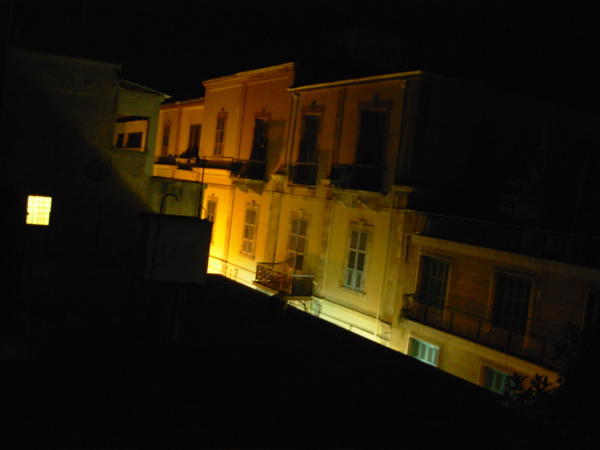
A typical street in the old section of Nicosia at night.
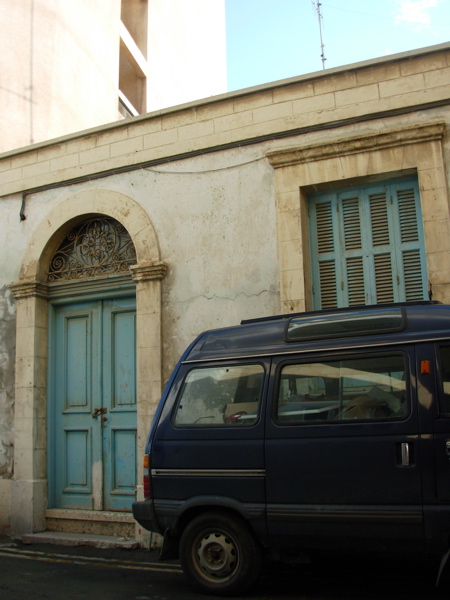
The colors of streets were really wonderful in Cyprus. I liked the blue shutters I kept seeing, in this case in Larnaka.
Cyprus, the two governments and the EU
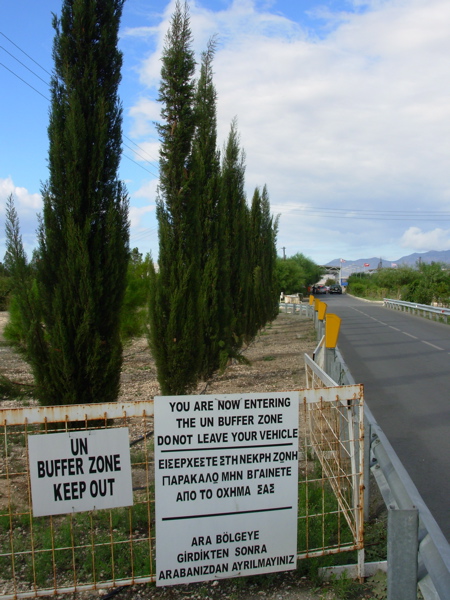

Here are a couple of photos of the UN Green Line between the "Turkish Republic of Northern Cyprus" and the Greek-oriented "Republic of Cyprus." Crossing today is quite easy and they will stamp you in and out on a separate sheet of paper to ease your travel in other places. We visited a tiny little Turkish town near Nicosia, not knowing really what we were going to see there. After about half an hour of curiosity seeking among government housing developments, and modest commercial buildings and a coffee shop, we shrugged and returned to the more tourist-oriented Greek side. When we returned to our rental car, we realized we had parked near cement machine-gun fortifications, grown over with plants. They call it Cyprus coffee in the south, but you can imagine that they definitely call the muddy, thick espresso Turkish in the north.
This website for the capital Nicosia not surprisingly pushes political buttons by pronouncing Nicosia "The Last Divided City in Europe." Other signs of competing political claims are preseneted to tourists like myself, from newspapers, billboards, brochures, roadsigns and even maps themselves, pointing out the areas that are "under foreign occupation." A juice bar owner in Agia Napa, in the south, said that there was "nothing" to see in the north. He said, "I don't know about you, but when someone comes to my country, I only want to tell them to see what there is to be proud about. Save your time and stay in the Free State." A Greek Cypriot friend of mine had a sister advised me not to spend any money in the north that would undercut "the boycott." On the other hand, a Turkish-American friend has told me that the Turkish Cypriots are the victims of colonialism in this standoff and the EU is just using the Cyprus issue to marginalize Turkey.
Having spent almost all of our time on one half of an island, even though we did not get much of the Greek narrative down, we heard almost nothing of the Turkish one. And as I began to see in the past while living in Northern Ireland, I have to imagine there is a spectrum between the hard line opinions with a more complicated and interesting history that could be the basis for a shared future in a unified power-sharing arrangement. Easy for me to say, I know. Regardless of our interest in human rights and politics, Christian, Hania, Kavita and I were just basically hanging out on the beach, driving around, occasionally taking pictures of pretty things.
12.09.2006


12.08.2006
Abdullahi An-Na'im on Shari'a Law
This week, Abdullahi An-Na'im came to AUC to deliver a few lectures. He points out some interesting possibilities in the political sphere for forwarding emancipatory religious and human rights agendas in the Muslim World. Far from being an advocate of a Bush/Rice vision for the Middle East (which could go unstated if only they'd stop invoking human rights), he criticizes both the imposed colonial discourse and the post-colonial Islamist discourse on these matters. Since I don't feel competent to sum up his work, I'll put a few links up.
Take a look at An-Na'im's project, The Future of Shari'a Law, and his own website at Emory University in Atlanta, USA, which features several downloads of his work.
An-Na'im left Sudan after his mentor, the Islamic reformer Mahmoud Mohamed Taha, was executed by the Sudanese government in 1985. You can read about the Republican Brothers and their interest in Shari'a reform, among other projects, in several places, including:
New Perspectives Quarterly
Alfikra - The Republican Thought
World Peoples' Blog
The Sudanese Thinker
Take a look at An-Na'im's project, The Future of Shari'a Law, and his own website at Emory University in Atlanta, USA, which features several downloads of his work.
An-Na'im left Sudan after his mentor, the Islamic reformer Mahmoud Mohamed Taha, was executed by the Sudanese government in 1985. You can read about the Republican Brothers and their interest in Shari'a reform, among other projects, in several places, including:
New Perspectives Quarterly
Alfikra - The Republican Thought
World Peoples' Blog
The Sudanese Thinker
The Field
I am coming up for air after some writing, some traveling and various projects. My decline in output is making the CR sponsors a little restless. So to calm them down, I decided to embark on some long-winded prose without hyper-links and explain how I am thinking of the relationship of human rights to the state.
I've been thinking about somehing along the lines of David Kennedy: what is not working in the "field" of human rights, whether "field" means practical limits to professionalism generally, or more abstractly, a zone of politics, critique, imagination, and emancipation. I like the concept of emancipation, no matter that the word seems haughty or fundamentally historic as in its American abolitionist movement sense. People like David Kennedy describe human rights as trying to occupy the political field and obscuring alternative approaches to emancipation, and I think this is a good thing to be concerned about.
Human rights discourse takes a hard look at particular state actions, but not state sovereignty and the continuing power of states to commit such abuses. On the contrary, human rights discourse depends on state institutions so that they will enter into the conventions, protocols and other contracts that set up justicability for human rights claims. This is a problem for several reasons, for example, most of the world's nation-states have their origins in a monopolization of legal uses of violence (and often speech, assembly and other personal freedoms) in the hands of an elite who barred what we now may consider human rights concepts, such as the right to life, self-determination, non-discrimination, and as described in the African Charter, the rights of peoples. While I accept that human rights law's origin in the state means that it has its origin in hegemony, I think human rights law presents some important opportunities for emancipation. New ideas about jurisprudence, admissibility, and of course, new legal norms themselves may be moving in the direction of wider support and capacity to reconfigure and localize formal aspects of the human rights movement. This is a good thing, in my view.
Yet in any close look at human rights, some chewy epistemological questions emerge. Who or what, other than the state, or the contracts agreed to by states in common, can stabilize rights, grant them, and maintain access to them? If we try to keep rights, but refuse their origins in the state, we assume that human dignity or some other human quality is the basis for an ethic of human treatment that has its origins prior to the state, leading us to particular ideas about religion or a supposedly self-evident humanist inkling akin to the Golden Rule. If indeed an origin for rights exists outside of the state, why do we find throughout world history so many variations in societal norms and roles? Do human rights step in when the state fails, or do states use the simple fact of their accession to human rights instruments to legitimize their abuses? States typically wager that enforcement of international law is weak and that challenges to state power from human rights instruments will only come in the form of negative limits, which can be gotten around with a little creativity or obfuscation. Resulting proposals to replace state citizenship with some new global citizenship replace the original questions about states and rights with new questions that may even be more problematic concerning soft regional power. What would global or regional citizenship even mean? I really cannot tell.
The idea in all of this for me is that somehow emancipation through legal means needs to be complemented by emancipation through political means, and likely proceeded by it. Maybe a critique of the state can be synonymous with legal reforms, and a legitimate juncture between the two will be easier to imagine in the future. For now, the sense of human rights as a new, contingent vision of power, challenging both the state and the political sphere even while it draws strength and attention from them, is interesting to me. I will still admit the following, and encourage others to do the same: that the attempts of human rights at emancipation seem outmatched and internally confused for the foreseeable future. But this does not need to dissuade us from working harder to reconcile different emancipatory strategies.
I've been thinking about somehing along the lines of David Kennedy: what is not working in the "field" of human rights, whether "field" means practical limits to professionalism generally, or more abstractly, a zone of politics, critique, imagination, and emancipation. I like the concept of emancipation, no matter that the word seems haughty or fundamentally historic as in its American abolitionist movement sense. People like David Kennedy describe human rights as trying to occupy the political field and obscuring alternative approaches to emancipation, and I think this is a good thing to be concerned about.
Human rights discourse takes a hard look at particular state actions, but not state sovereignty and the continuing power of states to commit such abuses. On the contrary, human rights discourse depends on state institutions so that they will enter into the conventions, protocols and other contracts that set up justicability for human rights claims. This is a problem for several reasons, for example, most of the world's nation-states have their origins in a monopolization of legal uses of violence (and often speech, assembly and other personal freedoms) in the hands of an elite who barred what we now may consider human rights concepts, such as the right to life, self-determination, non-discrimination, and as described in the African Charter, the rights of peoples. While I accept that human rights law's origin in the state means that it has its origin in hegemony, I think human rights law presents some important opportunities for emancipation. New ideas about jurisprudence, admissibility, and of course, new legal norms themselves may be moving in the direction of wider support and capacity to reconfigure and localize formal aspects of the human rights movement. This is a good thing, in my view.
Yet in any close look at human rights, some chewy epistemological questions emerge. Who or what, other than the state, or the contracts agreed to by states in common, can stabilize rights, grant them, and maintain access to them? If we try to keep rights, but refuse their origins in the state, we assume that human dignity or some other human quality is the basis for an ethic of human treatment that has its origins prior to the state, leading us to particular ideas about religion or a supposedly self-evident humanist inkling akin to the Golden Rule. If indeed an origin for rights exists outside of the state, why do we find throughout world history so many variations in societal norms and roles? Do human rights step in when the state fails, or do states use the simple fact of their accession to human rights instruments to legitimize their abuses? States typically wager that enforcement of international law is weak and that challenges to state power from human rights instruments will only come in the form of negative limits, which can be gotten around with a little creativity or obfuscation. Resulting proposals to replace state citizenship with some new global citizenship replace the original questions about states and rights with new questions that may even be more problematic concerning soft regional power. What would global or regional citizenship even mean? I really cannot tell.
The idea in all of this for me is that somehow emancipation through legal means needs to be complemented by emancipation through political means, and likely proceeded by it. Maybe a critique of the state can be synonymous with legal reforms, and a legitimate juncture between the two will be easier to imagine in the future. For now, the sense of human rights as a new, contingent vision of power, challenging both the state and the political sphere even while it draws strength and attention from them, is interesting to me. I will still admit the following, and encourage others to do the same: that the attempts of human rights at emancipation seem outmatched and internally confused for the foreseeable future. But this does not need to dissuade us from working harder to reconcile different emancipatory strategies.
11.15.2006
Victory Soup
For a few days last week, in a food poisoning haze, I spent much of my time walking dizzily back and forth between the bathroom and my bed.
After I stabilized and remounted the reading/taxi/smile horses, I found myself ready to eat a delicious soup, the invention of a good friend of mine here, Adolf. He and my roommate Joseph and I enjoyed a nice meal together this past weekend. The soup represents a dramatic moral victory for me: food without poisoning.
Victory Soup
Serves 3 Dudes
Chop up 1/4 kilo (each) of:
Okra (Bamieh)
Potato (Botatis)
Freshly-Shelled Peas (Fasoulia)
Carrot (Gazaht)
Boil lightly in enough water to cover it up for 30-40 minutes until it all seems tender. Don't worry about the broth, it will be thin, no problem. The key, though: a few dashes of cumin, pepper and salt to taste with a very Egyptian squirt of lemon.
Complement Victory Soup with kofta/tomato/onion/tahini sandwiches in pita-type bread.
After I stabilized and remounted the reading/taxi/smile horses, I found myself ready to eat a delicious soup, the invention of a good friend of mine here, Adolf. He and my roommate Joseph and I enjoyed a nice meal together this past weekend. The soup represents a dramatic moral victory for me: food without poisoning.
Victory Soup
Serves 3 Dudes
Chop up 1/4 kilo (each) of:
Okra (Bamieh)
Potato (Botatis)
Freshly-Shelled Peas (Fasoulia)
Carrot (Gazaht)
Boil lightly in enough water to cover it up for 30-40 minutes until it all seems tender. Don't worry about the broth, it will be thin, no problem. The key, though: a few dashes of cumin, pepper and salt to taste with a very Egyptian squirt of lemon.
Complement Victory Soup with kofta/tomato/onion/tahini sandwiches in pita-type bread.
11.07.2006
An Iftar in Imbaba
This posting comes about three weeks late. But travel with me through these somewhat blurry photos to that time known as the final week of Ramadan, that place known as Imbaba, Cairo, where you would have found me with a couple of foreign friends enjoying a wonderful evening of food, fireworks and banter with Egyptian pals in their neighborhood, not so far from where I live.
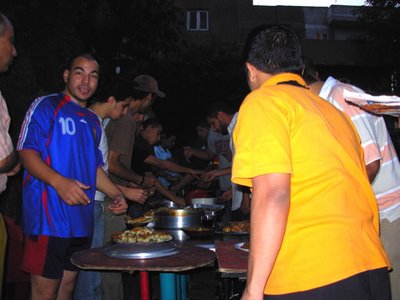 The iftar served on the sidewalk outside of this restaurant was in such hot demand that everyone stood shoulder to shoulder using forks to eat out of big dishes. Semolina pastas, koushary, nutty pastries, and casseroles of beef, lamb and chicken were de rigeur. To drink: tamarind juice, kharkady and various root-derived beverages. Mumtaz!
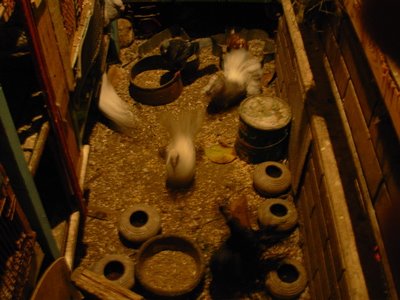 Adjacent to the restaurant was this assemblage of birdcages, containing canaries, parakeets, pigeons and doves. The proprietor is a local legend and also an antiques collector. I did not feel comfortable taking his picture but I had no problem taking pictures of his birds.
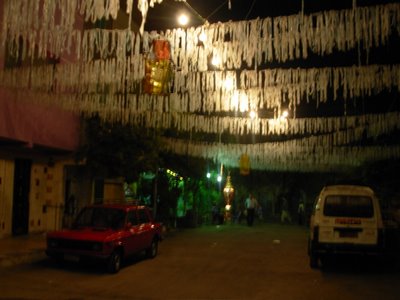 Ramadan streamers can be so lovely as to be worthy of their own holiday.
 The iftar served on the sidewalk outside of this restaurant was in such hot demand that everyone stood shoulder to shoulder using forks to eat out of big dishes. Semolina pastas, koushary, nutty pastries, and casseroles of beef, lamb and chicken were de rigeur. To drink: tamarind juice, kharkady and various root-derived beverages. Mumtaz!
 Adjacent to the restaurant was this assemblage of birdcages, containing canaries, parakeets, pigeons and doves. The proprietor is a local legend and also an antiques collector. I did not feel comfortable taking his picture but I had no problem taking pictures of his birds.
 Ramadan streamers can be so lovely as to be worthy of their own holiday.
Subscribe to:
Posts (Atom)
